

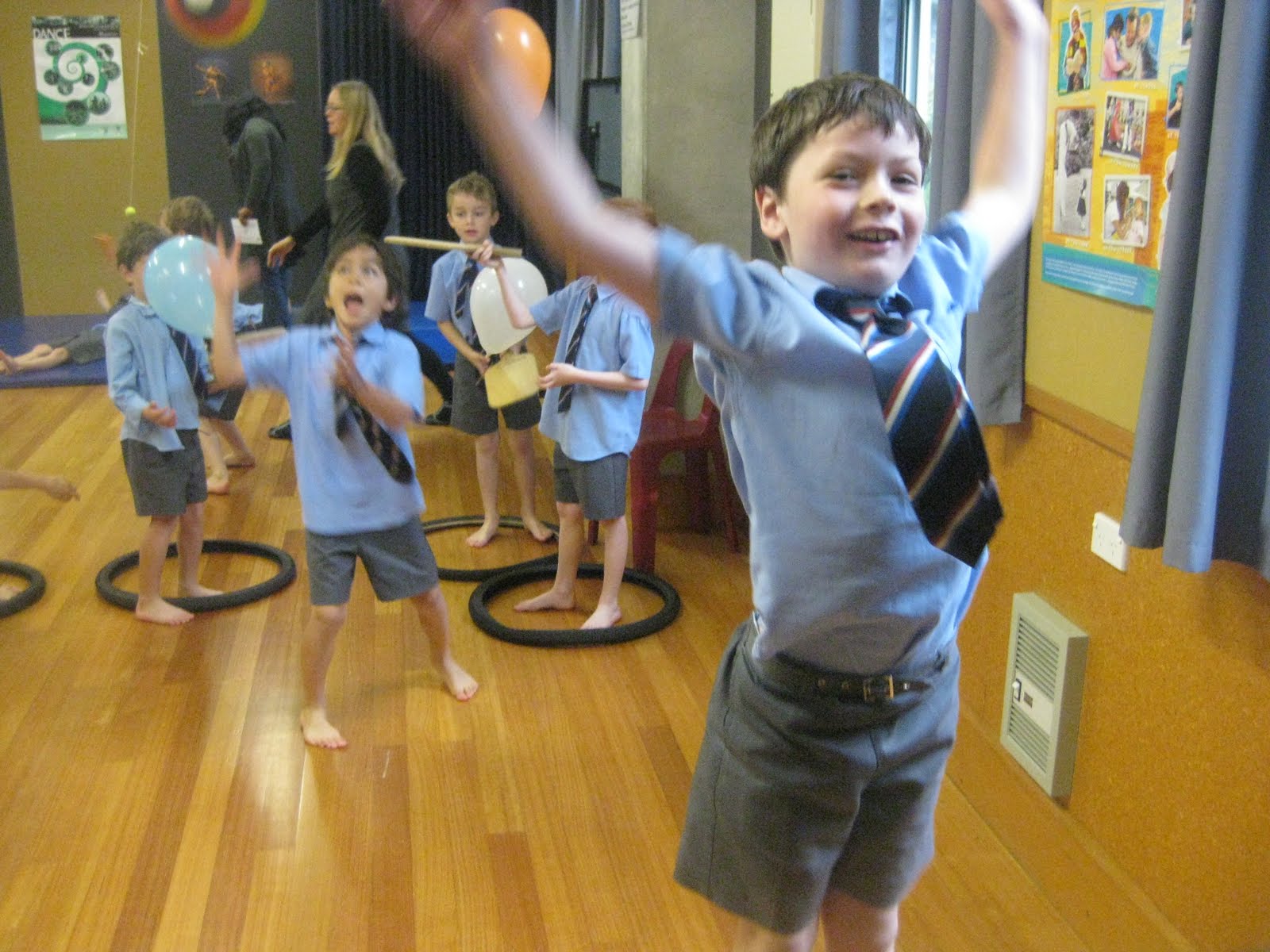


How is PMP structured?
The programme consists of three parts
1. Floor Session
This is taken by the teacher once a week. During this session motor patterns are established before working on equipment. Fine motor/rhythm activities are introduced to the children.
2. Equipment Sessions
Two equipment sessions are held each week and it is here that you, our helpers, are essential if the PMP is to be successful. In this session you will see:
Stations 5 activities set up using equipment.
Each group will spend about 5 minutes
at a station. Each activity will be in the equipment session for 5 sessions. On
the last session students will be assessed.
A new activity will be added at each session. Therefore, at every session
one activity will be assessed and one
new activity will be introduced.
Cards These will illustrate the activity at
the station and give you further advice
on how to run your station.
Movement At the completion of the activity the
teacher will go through a ‘stop! – move
on’ procedure. The children move to
the next station they are directed to.
Assessment One activity each day is assessed
(usually by the teacher). You may be
asked to gather some information by
the teacher e.g. if an activity needed
to be individualised. You will need to make honest judgements so that data
is reliable.
3. Language Follow-up
This session may be taken back in the classroom. Through this session perceptions and concepts learned in the equipment session are discussed again and may be drawn or written about.
Techniques
It is imperative for safety and for the outcome of the activity that it be completed correctly. That is, the correct technique must be used on each piece of equipment. The card will give you the correct technique.
Eye Tracking
This station is in the programme every day and is one of the most important activities you will be asked to take. The children are required to follow a moving ball with their eyes while keeping their head still. The activity helps to develop tracking and convergence skills i.e. the ability to move the eyes from one side to the other and from near to far/far to near. This activity can become tedious so it requires you to be able to keep the children’s interest while ensuring the children are in fact watching the ball while it swings.
Individualisation
Each of the activities is set at a level of difficulty which will challenge most children. However, in each group there will be some children for whom the task will be a little too easy or difficult. By ‘individualising ‘ the task we can make sure that each child has an experience at his level of capability. Each card has some ideas for doing this.
Safety
Children will be running, climbing, rolling, swinging, balancing, sliding etc. The helpers must be conscious of possible dangers and point these out to the station group so that they are safety aware and assume responsibility for the safety of others as well as themselves.
Some hints:
Establish ‘go’ points on the equipment where children must wait for you to say “go” before they move, especially on obstacle courses where you may need to help children through one part of it.
Establish a ‘stop’ signal in case you need to stop your group if a dangerous situation develops. This could be ‘freeze’, ‘stop there’, but it must mean STOP.
For some people one side is better to supervise from than the other i.e. left side of the child for right handed people. Work out which is more comfortable for you.


